India’s First Fast Breeder Reactor Goes Critical — and Vindicates Seven Decades of Strategic Patience
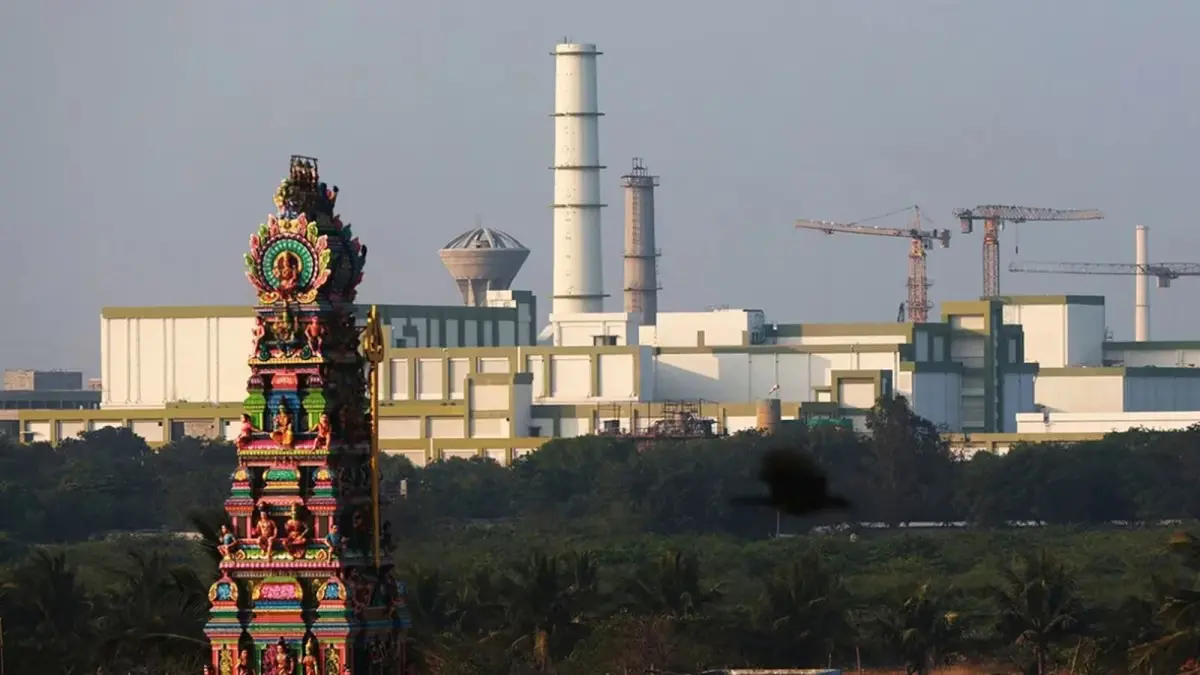
On the evening of 6 April 2026, Prime Minister Narendra Modi announced that the Prototype Fast Breeder Reactor (PFBR) at Kalpakkam in Tamil Nadu had attained criticality. The announcement was understated in its brevity, measured in its language. But the moment it described was anything but understated. India had just initiated a sustained nuclear chain reaction in a reactor of its own design, built by its own engineers, using its own fuel-fabrication capability — a reactor that produces more fissile material than it consumes. Dr Homi Jehangir Bhabha first sketched this vision in the 1950s. Seven decades later, India has lit the atomic fire he imagined.
A Flagship Achievement in India’s Energy Civilisation
The PFBR is a 500 MWe sodium-cooled fast breeder reactor, designed by the Indira Gandhi Centre for Atomic Research (IGCAR) and constructed by Bharatiya Nabhikiya Vidyut Nigam Limited (BHAVINI), under the aegis of the Department of Atomic Energy. More than 200 Indian industries — including MSMEs — contributed to its construction. It is, without qualification, the most complex engineering undertaking that independent India has completed in the energy sector. In the international context, once the PFBR is fully commissioned and begins commercial power generation, India will become only the second country in the world — after Russia — to operate a commercial fast-breeder reactor. That is the peer group in which India now stands.
What makes the PFBR so strategically consequential is the logic of its fuel cycle. Conventional reactors consume uranium and leave behind spent fuel — a liability. The fast breeder does something qualitatively different: its uranium-238 blanket undergoes nuclear transmutation during operation, producing plutonium-239, which is itself fissile fuel. The reactor breeds more than it burns. In an era of growing global competition for uranium supply, this capability is not merely scientific — it is a sovereign energy asset of the first order. The United States, Japan, the United Kingdom, France, and Germany collectively spent upwards of $50 billion on fast breeder technology before abandoning their programmes. India spent a fraction of that, persevered through two decades of delays, and has now joined the very small club of nations — alongside Russia and China — operating a fast breeder reactor at commercial scale.
The Thorium Imperative: Kerala’s Monazite and India’s Strategic Endowment
India sits atop approximately 11.93 million tonnes of thorium — roughly 25 per cent of global reserves. Much of it lies embedded in the monazite sands of Kerala’s coastline, stretching from Chavara in Kollam to the beaches of Kasaragod. This geological endowment has been the animating logic of Bhabha’s three-stage programme from the beginning. Thorium-232 is not itself fissile — it cannot directly sustain a chain reaction. But when irradiated by fast neutrons from a breeder reactor, it transmutes into Uranium-233, which is an excellent fissile fuel. The PFBR is designed to begin this transmutation cycle in Stage 2 by using thorium as a blanket material alongside uranium-238, producing U-233 for the eventual Stage 3 thorium reactors.
Yet honesty demands a candid assessment. Stage 3 — the full thorium fuel cycle using Advanced Heavy Water Reactors — remains a work in progress. The AHWR-300 MW design has been developed at BARC, and thorium fuel fabrication technology exists. However, no commercial thorium reactor is yet operational anywhere in the world. India’s monazite deposits, though vast, are also mined under strict environmental and coastal regulations. The path from Kerala’s beaches to a thorium-powered grid passes through years of further reactor commissioning, reprocessing plant development, and regulatory clearance. The PFBR’s criticality is a decisive gateway — but the journey through that gateway will take another generation of sustained political will and scientific investment.
The Shakti Act: Breaking the Public Sector Monopoly in Nuclear Power
The PFBR milestone does not stand alone. It must be read alongside another transformative development: the enactment of the Nuclear Energy Mission framework and, critically, the amendment to the Atomic Energy Act through what has come to be known as the Shakti legislation — a central law that, for the first time, permits the private sector to participate in nuclear power generation in India. For seven decades, the Atomic Energy Act of 1962 maintained an absolute State monopoly over nuclear energy — a monopoly born of legitimate Cold War-era security concerns but one that had, over time, become an economic and institutional constraint on the pace of nuclear expansion.
The Shakti enactment is significant on three levels simultaneously. Scientifically, it signals that nuclear technology in India has matured sufficiently to be entrusted to regulated private operators under AERB oversight. Psychologically, it dismantles the wall of exceptionalism that treated nuclear power as categorically different from other strategic industries such as defence manufacturing, where private participation is now a settled policy. Economically, it opens the door to private capital and management efficiency that will be essential if India is to meet its declared target of 100 GW of nuclear capacity by 2047. Public sector balance sheets and budgetary cycles alone cannot finance that ambition. The Shakti Act and the PFBR criticality together constitute the twin pillars of India’s new nuclear moment.
Twenty Years in the Making: Delay, Perseverance, and the Lessons of Kalpakkam
Celebration should not obscure the record. Construction of the PFBR began in 2004 with an original target of commissioning by 2010. The reactor missed that deadline, and then several subsequent ones. Challenges with liquid sodium coolant technology — sodium burns in air and explodes in contact with water — required bespoke engineering solutions that could not be borrowed from any foreign handbook. Budget sanctions were delayed. Technology procurement faced geopolitical headwinds in the post-Pokhran sanctions environment. Total project expenditure has crossed Rs. 7,600 crore. The delays were real, the costs were real, and the institutional frustrations were real.
And yet, every problem was ultimately solved by Indian scientists and engineers. No foreign vendor was brought in to rescue the project. The sodium coolant systems were mastered indigenously. The MOX fuel fabrication capability was built at Tarapur. The control and instrumentation systems were designed in-house. When AERB cleared fuel loading in October 2025 and the first approach to criticality followed in April 2026, it was not merely a reactor that achieved criticality — it was an institutional culture of scientific self-reliance that was validated. Kalpakkam has produced not just a reactor but a cadre of engineers who now know how to build the next ones faster and better.
What Comes Next: The Road from Criticality to a Thorium-Powered India
Criticality is the beginning of commissioning, not its end. The PFBR must now undergo staged power ascent, connect to the grid, and demonstrate sustained commercial operation before the government proceeds with the financial sanction of the twin FBR 1 and FBR 2 units already planned at Kalpakkam. Five Small Modular Reactors under the Bharat SMR programme are to follow by 2033. The government’s target of 22 GW of nuclear capacity by 2031-32 is ambitious by any measure. Meeting it will require not just more reactors but also faster regulatory clearances, a streamlined land-acquisition framework for nuclear sites, and a skilled workforce pipeline that only a revitalised nuclear engineering education system can supply.
The PFBR’s achievement of criticality is India’s most significant energy milestone since the commissioning of the first Tarapur reactor in 1969. It validates Bhabha’s architecture, vindicates seven decades of patient State investment, and positions India at the technological frontier of global nuclear power. The monazite sands of Kerala have always held the promise of an inexhaustible energy future. Kalpakkam has now brought that promise within reach of fulfilment. India has lit the atomic fire. The task ahead is to sustain it.