India’s quiet yet decisive moves in recent months to ink rare earth partnerships with Canada and Brazil signal a maturing recognition: the future of sovereignty will rest as much on control over supply chains as on command over borders. By diversifying its sources of rare earth elements (REEs)—vital for green technologies, defense systems, and electronics—India is not only hedging against China’s chokehold over global mineral processing but also reaffirming its ambition to stand as a self-reliant, tech-forward power in the 21st century.
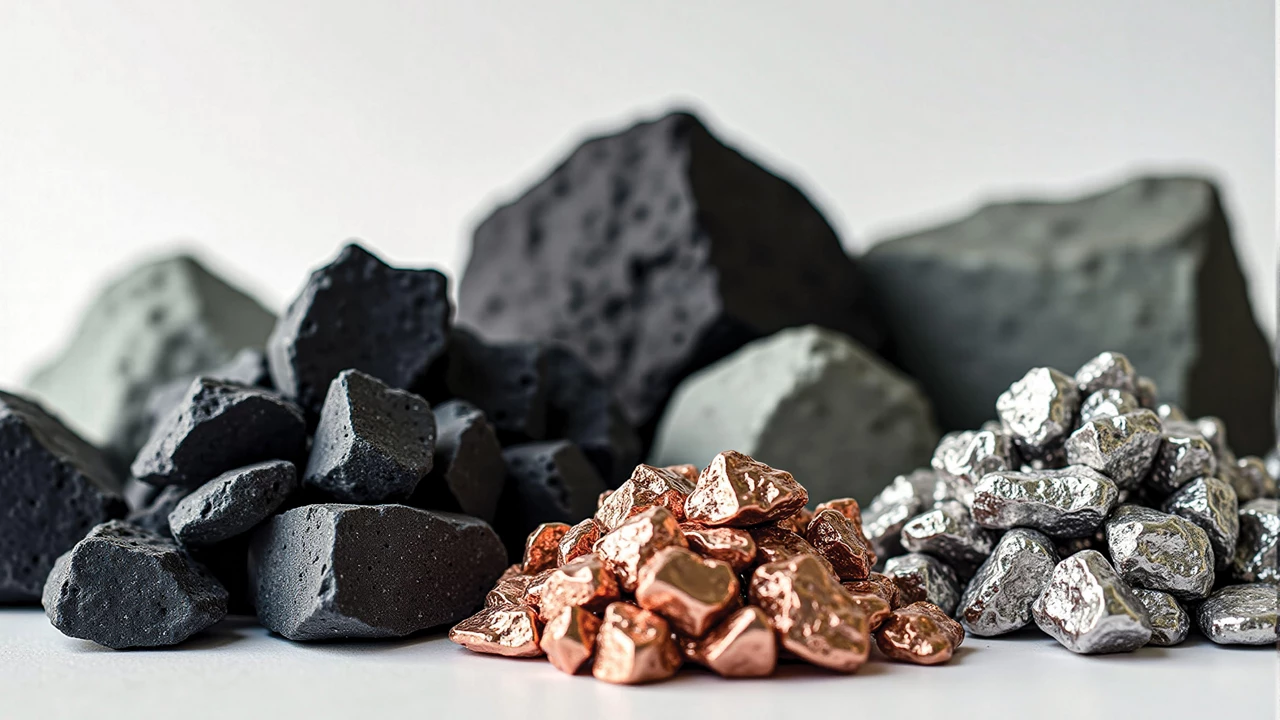
Rare earths are the invisible foundation of modern technology. Electric vehicles, wind turbines, semiconductors, and precision-guided missiles all depend on these 17 minerals, which are neither truly “rare” nor evenly distributed. What makes them precious is the environmental cost and technical complexity of mining and separating them. Over the past three decades, China has mastered this process and leveraged its near-monopoly—controlling about 60–70% of global production and over 80% of processing capacity—to wield subtle yet potent influence over industrial and geopolitical rivals alike.
India recognized this vulnerability early but responded unevenly. Despite possessing significant reserves—estimated at nearly 6% of the world’s total—the country has struggled to build refining and value-addition capabilities. Ilmenite and monazite sands in coastal Tamil Nadu, Kerala, and Odisha hold promise, yet bureaucratic inertia, environmental sensitivities, and limited R&D investment have prevented India from developing competitive processing technologies. Consequently, while India mines some rare earths, it largely depends on China for separated oxides and magnets.
That is changing. The new deals with Canada and Brazil, concluded under the framework of broader critical minerals partnerships, mark a strategic inflection. Canada, a member of the Western-led Minerals Security Partnership (MSP), offers technological expertise, regulatory stability, and transparent ESG standards. Brazil, rich in niobium, rare earths, and lithium, provides resource abundance and complementarity with India’s industrial demand. By engaging with both North America and South America, New Delhi is diversifying not only geology but also geopolitics.
For India, the logic is threefold. First, supply security: ensuring stable, non-China-linked imports of key minerals for its fast-growing EV, renewable, and semiconductor sectors. Second, industrial capacity building: learning advanced processing and recycling techniques through joint ventures and technology sharing. Third, strategic autonomy: reducing dependence on any single supplier—especially one whose economic tools often blur with political leverage.
These goals align closely with the government’s broader “Atmanirbhar Bharat” vision and its efforts to integrate deeper with trusted international supply chains. The partnership model—where India is not merely a buyer but a co-developer of projects—also reflects a shift from transactional to transformational diplomacy. The creation of the India–Canada Critical Minerals Working Group and corresponding initiatives with Brazil’s geological service aim to plan end-to-end projects from exploration and extraction to refining and trade.
Still, success will depend on execution. Canada and Brazil’s mineral sectors operate under exacting environmental frameworks that often lengthen project timelines. India’s public-sector firms, such as IREL (India) and KABIL—a joint venture between NALCO, Hindustan Copper, and MECL—will need to combine commercial agility with transparency to attract private and foreign capital. Domestic infrastructure for refining, magnet production, and recycling remains thin and must expand rapidly if India wants to move up the value chain.
The global context also matters. The United States, Japan, and the European Union are racing to build China-independent supply chains, while Beijing itself is tightening export controls on critical inputs like gallium and graphite. This “resource realignment” offers India an opening: by becoming a reliable partner to both Western consumers and Global South producers, India can position itself as a bridge economy in the critical minerals ecosystem. In doing so, it not only safeguards its economic future but also enhances its diplomatic leverage.
India’s rare earth diplomacy is thus more than resource acquisition—it is strategic self-definition. Each tonne of neodymium or dysprosium sourced without Chinese mediation reinforces India’s autonomy in defense manufacturing, energy transition, and digital infrastructure. The challenge lies in converting long-term memoranda into functioning supply chains, balancing environmental responsibility with industrial urgency, and fending off the temptation to replicate China’s extractive model without its efficiency.
If India succeeds, it could help rewrite the global critical minerals map—dispersing power, reducing vulnerability, and proving that sovereignty in the age of technology begins deep beneath the earth’s surface.