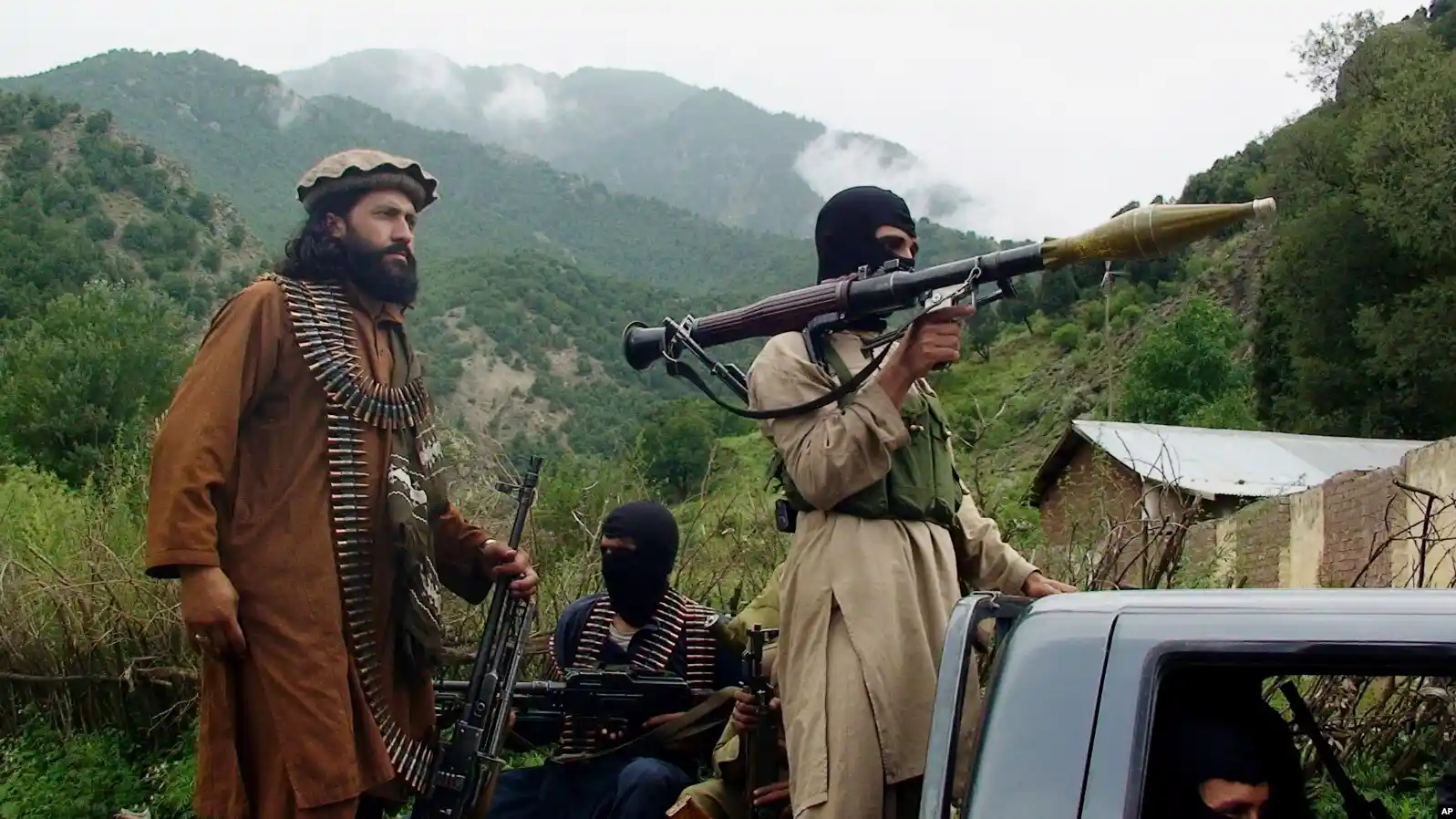
The US Congressional Research Service (CRS) has recently updated its report on militant groups in Pakistan, offering a stark validation of a decades-long reality: Pakistan remains the primary hub for organised terrorism. The report highlighted that twelve out of the 15 groups listed have been designated as Foreign Terrorist Organisations (FTOs) under US law, with most being animated by Islamist extremist ideology. The report categorises these outfits not merely by name but by their specific operational theatres, illuminating a terror ecosystem that has not only left a mark globally but penetrated domestically.
This crisis is rooted in the 1980s, when the Pakistani security establishment, leveraging billions in foreign aid during the Soviet-Afghan War, built a sophisticated infrastructure to train the mujahideen. Upon Soviet withdrawal, this apparatus was repurposed to serve Pakistan’s regional ambitions rather than being dismantled. According to the report, religious schools or madrasas taught doctrines which could lead to greater acceptance of violent extremist ideology and “Pakistan took some steps to curtail the activities of terrorist groups in 2023”.
Major cities like Lahore and Islamabad have seen an increase in attacks since the Taliban took over in Afghanistan in 2021. Fatalities have increased near the border of Afghanistan, especially in Khyber Pakhtunkhwa and Balochistan, in the past five years. Islamabad has time and again accused India of supporting these terror outfits that are operating in KP and Balochistan.
To curb such activities, a national action plan was launched in 2014 to ensure that “no armed militants were allowed to function in the country (Pakistan)”. Several intel-based operations have failed to degrade these terror groups that continue to operate on Pakistani soil. Militant violence surged by 34% in Pakistan in 2025 compared to the previous year, making it the deadliest year since 2013, according to the 2026 Global Terrorism Index. This increase in fatalities also suggests a failure to successfully degrade the terror infrastructure.
The CRS report meticulously breaks these “notable terror and other groups operating” in Pakistan into five broad types:
Globally Oriented Groups, focused on transnational jihad, are exemplified by Al-Qaeda, its regional affiliate, Al-Qaeda in the Indian Subcontinent (AQIS), and Islamic State-Khorasan Province (ISKP). Al-Qaeda, or the core, was founded by Osama bin Laden, who was responsible for the 9/11 attacks on the US in 2001. After Osama bin Laden was killed in 2011, the core group degraded but now has alliances with other Pakistani groups. The AQIS, under the leadership of Amir Umar, attempted to hijack a “Pakistan Navy frigate” in 2014. ISKP is a “regional affiliate” of ISIS (now IS) and has an estimated 4,000-6,000 fighters who were formerly with the TTP.
A second critical pillar comprises Afghanistan-Oriented Groups, which Islamabad employs as proxies to maintain influence in Kabul. The Afghan Taliban is also named “Specially Designated Global Terrorist”. It gained strength when US forces decreased after 2014 and took over Kabul in 2021. The Haqqani Network, the group which has about 100 core members, is called a “true extension” of Pakistan’s Inter-Services Intelligence (ISI) by experts. It showed how destructive it could be during the 2011 attack on the U.S. Embassy in Kabul. The report points out that for more than twenty years, key leadership groups like the Quetta Shura openly worked out of cities in Pakistan.
The most persistent threat to regional stability remains the India- and Kashmir-Oriented Groups, nurtured specifically to wage a “war of a thousand cuts” against the Indian state. High-profile atrocities include the 2008 Mumbai sea-borne assault and the 2019 Pulwama suicide bombing. Alarmingly, the CRS notes that the infrastructure for these groups remains “largely intact” under front organisations. The report identifies the Resistance Front (TRF), a rebranded wing of LeT, as the perpetrator of the 2025 Pahalgam massacre of 26 pilgrims, an event that directly triggered India’s retaliatory “Operation Sindoor.” Jaish-e-Mohammed, founded by Masood Azhar, was responsible for the Parliament attack in 2001. Harakat-ul Jihad Islami (HUJI) operates in Pakistan, Bangladesh, and India and seeks to annex Indian-administered Kashmir into Pakistan. Harakat ul- Mujahidin was responsible for hijacking an Indian airliner that led to the release of a JEM member in 1999. Hizb-ul-Mujahedin is one of the largest and oldest militant groups operating in India and seeks independence for Kashmir from Pakistan.
This ecosystem has resulted in repercussions through Domestically Oriented Groups or the 4th type, like the Tehrik-i-Taliban Pakistan (TTP). Born from the same radical breeding grounds, the TTP now targets the Pakistani state itself, with the horrific 2014 Peshawar school massacre remaining a defining moment. The Balochistan Liberation Army (BLA)is an ethnic-based separatist group targeting PRC national and funded projects in Balochistan and has also been behind a series of attacks against Pakistani officials early this year.
Finally, the report addresses Sectarian Groups like Sipah-e-Sahaba and Lashkar-e-Jhangvi (LeJ) that drive internal radicalisation by targeting religious minorities to enforce a rigid Sunni identity. These groups serve a dual purpose, often utilised by the state to suppress secular or nationalist movements, particularly in Balochistan.
The persistence and longevity of the terror groups in Pakistan is not a result of a single failure but a combination of state policies, regional geopolitics, and underground financing. One of the primary reasons these outfits have been functioning for decades is that the security establishments use these fanatics as a force multiplier. The reports also highlight that the ISI have, over the years, set apart good and bad terrorists for their own foreign policy agenda. To give you the latest example, The Resistance Front, a proxy of LeT, was behind the horrific attacks in April 2025 in Pahalgam, killing 27 innocent Indian citizens. Even after all the pressure coming internationally, these outfits still continue to operate, sometimes finding loopholes as simple rebranding of their organisation names.
Pakistan has enabled this through a deliberate policy of “strategic depth,” providing financial lifelines and safe havens. As technology is growing, so are the methods in which these groups continue to get funded. According to the Washington International Law Journal, terror groups evolve by using a “multi-stream financial model that bypasses traditional banking ways”. Some groups often collect charity in the name of “Zakat” or religious donations from the citizens, which is used to keep such outfits running. They also use the Hawala system, an undocumented transfer of money, drug trafficking on the borders, illegal mining, and unregulated madrasas, making it impossible for global watchdogs to choke the financial lifelines. This perceived risk has historically forced the U.S., EU, and UN into a cycle of appeasement, providing Pakistan with the diplomatic space to continue its double game while the terror infrastructure remains fundamentally untouched.
Despite FATF grey-listing and withdrawal of security assistance, Pakistan has mastered “tactical compliance,” offering high-profile arrests only to allow masterminds to walk free once the spotlight fades. Furthermore, Islamabad has effectively used its nuclear arsenal as a shield, engaging in “nuclear blackmail” to deter decisive global action. The CRS report highlights that the global community has taken steps previously and should be stricter about its stance on these terror outfits. The duration of these groups is no longer a domestic security problem, but rather a failure of the international rule-based order. The international community must move to action-based strategies based on real-time consequences. The Financial Action Task Force (FATF) should consider moving Pakistan into the black list and monitor financial networks and curb the funding. There must be stricter actions for military and intelligence officers who cater to these safe havens. The international financing by the World Bank or the IMF should be audited, ensuring budgets are not being misused.
Five out of the 15 terror outfits mentioned are under the heading India and Kashmir-Oriented Militant. These groups, over the past decades, have infiltrated and attacked on Indian soil, killing innocent people. The resistance front was responsible for the most recent attacks in Pahalgam in April 2025. India has intensified a zero-tolerance policy towards terrorism and related operations like Operation Sindoor, a series of precision strikes on terror infrastructure across the Line of Control, which targeted and neutralised nine known locations in Pakistan. The report stresses viewing Kashmir not as a conflict zone but as a frontline for non-state actors threatening the security of a country. The white paper India presented to the UN earlier in 2026 argues that these groups are not only creating a bilateral issue but are in direct violation of the 1373 UN Security Council Resolution. For India, the report validates its decision to downgrade diplomatic ties and asserts that “blood and water cannot flow together.”
The world must fundamentally shift its engagement with the Pakistani state. While India must maintain its posture of proactive deterrence, the burden cannot rest solely on New Delhi. The US, UN, and EU must move beyond cosmetic sanctions and implement a total financial and diplomatic blockade on institutions that sustain terror activities. The international community must treat the facilitators of terrorism with the same severity as the perpetrators to dismantle permanently these factories of hate that have operated with impunity for forty years.