Why Trading Civilisations Outlast Empires by Measuring the Metal, Not the Portrait.
In the first century, Pliny the Elder was already complaining about the trade deficit. He watched with a mixture of awe and resentment as the Roman treasury was drained of 50 million sesterces annually to satisfy a Roman elite obsessed with Indian pepper, silk, and gems. It was a classic balance-of-payments crisis, and Rome’s solution was equally classic: they debased the currency.
Starting with Nero, the aureus was hollowed out. The imperial mint reduced its gold content, betting that the prestige of the Emperor’s profile would carry the value where the metal could not. They were wrong.
Archaeological sites across Southern India are littered with these Roman coins, and they tell a story of scepticism rather than submission. Almost all of them bear “test marks,” which are deep, deliberate gashes where Indian merchants used a scale and a blade to verify the purity of the gold. To the merchants of the Malabar Coast, the Caesar was irrelevant. What mattered was the weight. Two millennia later, the “currency” of global power has shifted from gold to maritime security, but the Indian instinct to verify the purity of the deal remains unchanged.
The Security Deficit of 2026
In March 2026, the Strait of Hormuz became the scene of a modern imperial debasement. For seventy years, the “gold standard” of global energy security was the American security guarantee. The world accepted the U.S. Dollar and U.S. naval hegemony as the baseline for trade. However, following the recent escalation between Washington, Israel, and Tehran, that security coin has been found to be largely base metal.
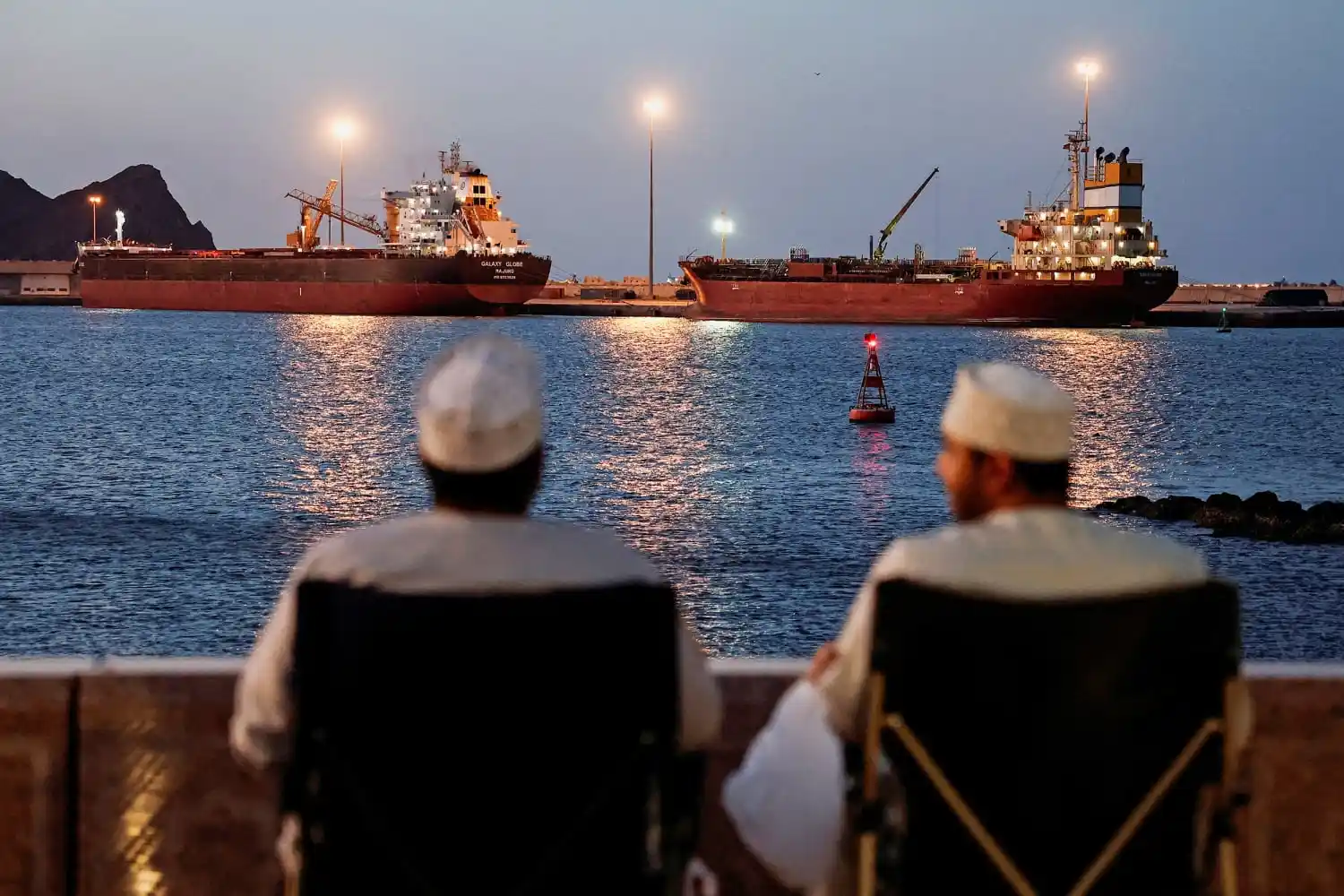
The Strait is a 21-mile-wide artery through which a fifth of the world’s oil flows. It is currently a “no-go zone” for Western shipping. Despite the presence of Allied carrier strike groups, drone swarms, and subsonic anti-ship missiles have effectively shuttered the waterway for the G7. For the West, the imperial security umbrella has folded. Yet, amidst the smoke, a curious anomaly has emerged. While global insurance markets have effectively blacklisted the Gulf, Indian-flagged vessels are moving with a quiet, calculated impunity.
The “Green Corridor” and the Logic of the Scale
India’s current success in the Strait is not a matter of luck, nor is it a sign of military superiority. It is a masterpiece of commercial realism. While Washington and Brussels viewed the Iranian crisis through the lens of ideology and punitive sanctions, New Delhi viewed it through the lens of the ledger.
On March 14, 2026, the Indian VLCC Samrat Ashok traversed the Strait unmolested. It was not shielded by Aegis destroyers. Instead, it was protected by a diplomatic arrangement negotiated in the quiet rooms of Tehran and Muscat. By refusing to join the Western military coalition, India signalled to the Iranian Revolutionary Guard Corps that its interests were purely arithmetic.
The result is the “Green Corridor,” which serves as a de facto safe passage for Indian energy. To the Iranians, India represents a vital, sanction-proof customer that pays in a basket of currencies that the U.S. Treasury cannot easily freeze. To New Delhi, this is the modern version of testing the gold. India recognised that the U.S. security guarantee was a debased coin that was incapable of ensuring flow. Consequently, it sought a different metal: sovereign neutrality.
The Price of Autonomy
The West often mistakes India’s strategic autonomy for indecision. In reality, it is the most decisive policy on the global stage. It is the refusal to be a tributary to an empire’s failing security architecture.
For the modern hegemon, the spectacle of Indian ships sailing safely through a war zone that has paralysed Western commerce is a bitter pill. It suggests that the “Emperor’s Portrait,” or the prestige of being an American ally, is now worth less than the “Merchant’s Scale,” which is the ability to maintain bilateral utility with an adversary.
The Eternal Ledger
The lesson of the last two thousand years is that empires are prone to the theatre of power. They believe their own myths of invincibility until a regional fire proves otherwise. Trading civilisations, however, survive by reading the numbers.
Rome tried to pay for its luxuries with diluted gold and discovered that the merchants of Muziris were better mathematicians than they were diplomats. Today, as the Strait of Hormuz burns, the world is witnessing a repeat performance. The U.S. continues to project authority, but India is the one measuring the value. In 2026, as in the time of Nero, the Emperor’s portrait may still travel with the coin. However, on the docks of the world, it is the merchant’s scale that decides who gets the pepper and who gets the oil.