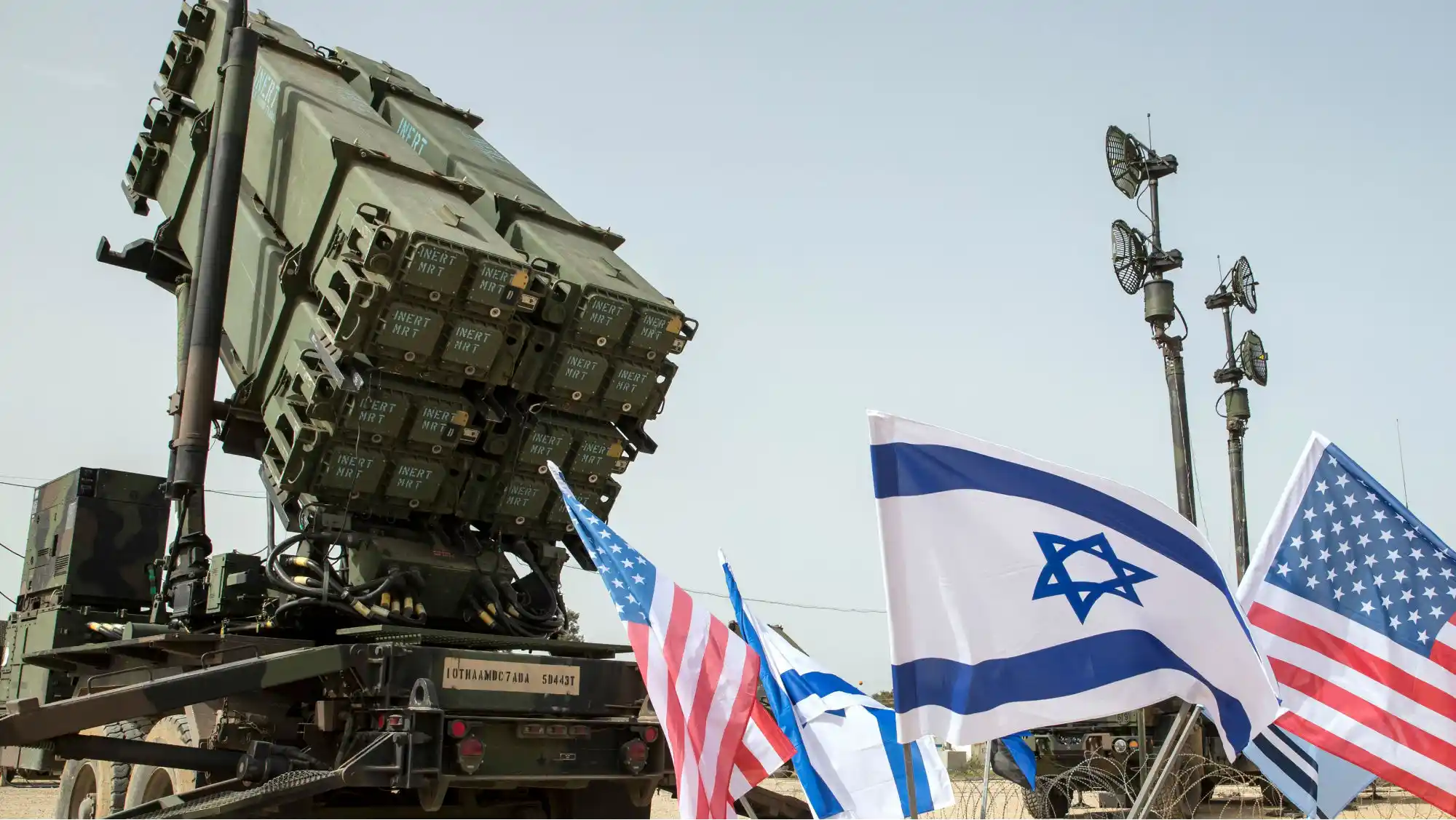
The outbreak of direct American and Israeli military strikes against Iran in February 2026 can be one of the most consequential escalations in Middle Eastern geopolitics. What distinguishes this episode is not merely the scale of violence, but the convergence of long-standing structural tensions like nuclear proliferation, regional hegemony, deterrence and domestic political pressures that together transformed a protracted rivalry into active, kinetic confrontation. Before the strikes, the US–Iran relations had fluctuated between tentative diplomatic engagement over Tehran’s nuclear program and periodic military brinksmanship. However, underlying these struggles remains the deep mutual distrust. Washington perceives Iran’s nuclear enrichment and missile capabilities as threats to regional security and global non-proliferation norms, while Tehran interprets American pressure and allied military presence as existentially hostile.
For years, Iran has pursued a composite deterrent strategy combining asymmetric forces and proxy networks in the Middle Eastern region. At the same time, Iranian domestic imperatives, including concerns about leadership legitimacy and economic struggles, have constrained Iranian flexibility in negotiations. Iranian leaders encountered domestic criticism for making what were seen as concessions without securing clear or concrete security guarantees in return. This situation strengthened hardline factions, who contended that Iran should assert its strength by responding firmly to any actions perceived as hostile or aggressive.
From the American perspective, the decision to employ major combat operations was shaped by multiple pressures. Administrations oscillating between deterrence and regime change rhetoric have long struggled to articulate achievable strategic goals vis-à-vis Iran. In 2026, American decision-makers regarded this operation as both punitive and preventive, aimed at deterring future threats. However, such rhetoric carries strategic risk, as it can harden adversary resistance rather than induce collapse.
Iran’s immediate responses to the strikes underscore the country’s resolve and operational adaptability. Rather than capitulating, Tehran launched retaliatory strikes on American military bases throughout the region. These reprisals were not limited to symbolic salvoes; they also targeted logistical and strategic nodes, inflicting material and psychological effects on coalition forces. Tehran’s leadership also highlighted continuity in strategy, i.e., leveraging regional proxies and expeditionary assets to expand the conflict beyond Iranian territory, thereby imposing asymmetric costs on American allies in the region without engaging in large-scale conventional confrontation.
The nature of Iran’s military response reveals a calculated logic rooted in deterrence. By signalling that aggression would be met with widespread and unpredictable retaliation, Tehran sought to impose a “cost multiplier” that complicates the American strategic calculus. However, this posture also carries inherent dangers. Escalation will not be linear but conditional and unpredictable. Misinterpretations, unintended military incidents, or the involvement of external actors can quickly intensify hostilities. Furthermore, Iran’s readiness to tolerate wider instability may create domestic and regional dissatisfaction, especially if civilian casualties increase or if prolonged conflict further weakens already fragile economic conditions. The sudden resort to military options by the United States and Israel signalled to Tehran that diplomatic avenues had limited strategic value or reliability. This undermining of diplomacy not only precluded near-term negotiation outcomes but also deepened structural scepticism about future engagement prospects.
Regionally, the confrontation has exacerbated existing fault lines across the Middle East. The Gulf states have welcomed action by the United States and Israel that checked Tehran’s regional influence but also expressed concern about being drawn into wider conflict. For Israel, participation in pre-emptive strikes against Iran underscored both the depth of its security anxieties and its willingness to act when it deems existential threats imminent. Yet, this alignment also tied Israeli strategic fortunes to American military frameworks, raising complex questions about autonomy in future regional engagements.
The global implications of this confrontation go well beyond the Middle Eastern borders. Energy markets reacted sharply to disruptions to the stability of the Persian Gulf, with oil prices spiking amid fears of supply chokepoints and logistical disruptions to shipping lanes in the Strait of Hormuz. Even in diversified global energy markets, prolonged uncertainty incentivises both consumer states and producers to reassess risk exposures. Nations dependent on energy resources from this region face immediate economic volatility, while longer-term investment patterns could accelerate shifts toward alternative energy sources and strategic reserves.
Moreover, the confrontation has geopolitical reverberations among great powers. Russia and China, both of which have cultivated strategic partnerships with Iran, viewed the escalation through lenses of their own competition with the United States. Beijing’s emphasis on non-interference and economic engagement contrasts with Washington’s coercive posture, providing Tehran with a narrative to leverage in seeking diplomatic and material support. Moscow, confronting Western pressure in its own theatres, recognized an opportunity to challenge American influence by reinforcing ties with Iran.
This escalation between the United States, Israel, and Iran underscores fundamental lessons about the intersection of military power, diplomacy, and strategic communication. First, the use of coercive military force against a highly motivated adversary does not necessarily ensure compliance or quick surrender; instead, it may strengthen resistance and expand the scope of the conflict. Second, without credible and sustained diplomatic engagement, supported by enforceable security guarantees and mutual commitments, the negotiations are unlikely to succeed when overshadowed by threats of force. Third, regional conflicts are rarely confined in space or time, and they tend to spread across alliances, economic systems, and domestic political arenas.
An additional layer of complexity arises from domestic political incentives on both sides. In the United States, polarized political dynamics and electoral cycles shape foreign policy options, incentivizing leaders to adopt grand promises of decisive action. Conversely, Iranian leaders must balance factional pressures, popular sentiments of national pride, and institutional imperatives of the country’s governance structures. These domestic constraints reduce strategic flexibility, making compromise more politically costly even when long-term national interests align with de-escalation.
Looking forward, the durability of this confrontation hinges on multiple variables. A negotiated cessation of hostilities would require credible mediators, trust-building mechanisms, and a reconfiguration of incentives that addresses core security concerns. If diplomatic efforts continue to be neglected, the conflict may develop into a prolonged war of attrition marked by intermittent escalations. The international community, including institutions such as the United Nations and regional organizations, can play a crucial role in facilitating dialogue and reducing humanitarian and economic consequences. Ultimately, without a comprehensive settlement that balances Iran’s security concerns with wider objectives of non-proliferation and regional stability, the likelihood of repeated escalations will remain significant.