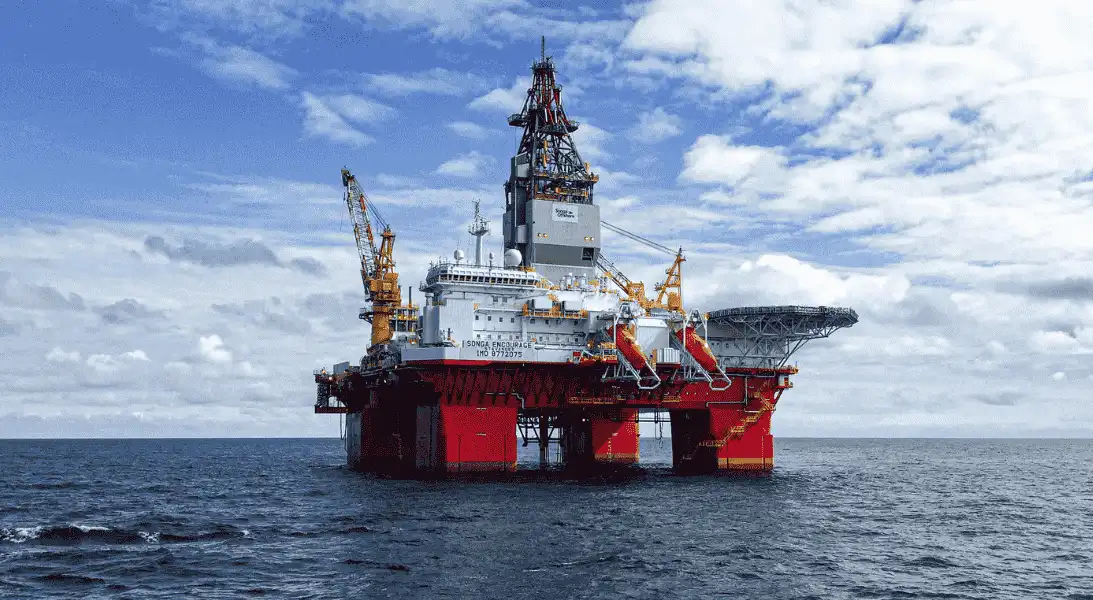
India’s quiet yet momentous stride in the Andaman Basin could well mark a turning point in its quest for self-reliance. Oil India Ltd (OIL), the country’s second-largest national oil company, may have just rewritten the map of India’s energy future with its first confirmed trace of natural gas in the Andaman offshore region – a development that could be as consequential as the discovery of Bombay High in the 1970s.
The story of India’s petroleum journey began in 1889 in the small town of Digboi, Assam, where Burmah Oil Company Limited (the precursor to Oil India Ltd) struck crude for the first time. For over 136 years, OIL has been synonymous with exploration and production across the country’s onshore basins. It became a Central Public Sector Enterprise in 1981 and, through decades of disciplined performance, earned the coveted Maharatna status in 2023 – joining an elite group of only 13 such enterprises in India.
With a turnover exceeding ₹41,000 crore and net profits nearing ₹10,000 crore in FY 2022–23, OIL’s fiscal health is strong. But the company’s newest chapter, the Andaman Basin discovery, could elevate it from financial success to national legend.
A Discovery Decades in the Making
Despite its long and distinguished record, OIL’s offshore ventures had historically been fraught with challenges. The company made multiple attempts in basins like the Mahanadi since 1978, investing heavily in seismic surveys and drilling campaigns that yielded nothing. Offshore exploration, particularly in deep and ultra-deep waters, has always demanded not just technology but also tenacity – qualities that OIL has now demonstrated in abundance.
Under the leadership of Dr. Ranjit Rath, OIL’s Chairman and Managing Director, the company has recalibrated its exploration and production strategy. Dr. Rath’s vision has emphasized an aggressive, globally competitive approach to both shallow and deepwater exploration, particularly in promising but underexplored regions such as the Krishna-Godavari, Kerala-Konkan, and, most notably, the Andaman & Nicobar offshore basins.
The Andaman Breakthrough
OIL’s Andaman operations span two offshore blocks acquired under the Open Acreage Licensing Policy (OALP):
- AN-OSHP-2018/1 (East Block) – covering 3,438.61 sq. km Offshore Area
- AN-OSHP-2018/2 (West Block) – covering 5,928.78 sq. km Offshore Area
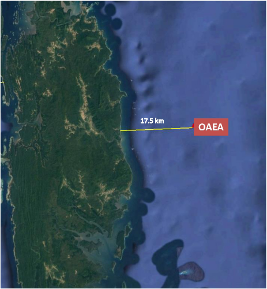
With an estimated investment of ₹3,000–3,500 crore, these ventures signify both ambition and commitment. It is from the second exploratory well – drilled at a water depth of 295 meters and a sub-surface depth of around 2,250 meters – that OIL struck gas. The sample analysis revealed an impressive 87% methane content, confirming the presence of natural gas.
Preliminary isotopic studies are ongoing to determine the extent of the gas reservoir, but early indicators suggest that this is no minor find. OIL is already testing higher-up prospects to evaluate commercial viability. If these wells prove productive, the Andaman Basin could emerge as a major gas-producing province – perhaps even rivalling the scale of Bombay High in its early years.
To fully realize the promise of this breakthrough, the Andaman gas discovery warrants a more aggressive appraisal program, encompassing advanced 3D seismic surveys and the drilling of additional exploratory and appraisal wells. Such a comprehensive campaign will be crucial for delineating the reservoir’s potential and establishing the field on a sustainable, commercial footing.
A National Milestone
India’s Petroleum and Natural Gas Minister, Dr. Hardeep Singh Puri, aptly described this discovery as a “significant milestone in the nation’s journey through Amrit Kaal.” The geological parallels are indeed striking: the Andaman Basin lies along the same tectonic belt that extends from gas-rich Myanmar in the north to Indonesia in the south – both countries with proven hydrocarbon success stories.
The discovery aligns perfectly with India’s twin imperatives: energy security and economic resilience. With natural gas positioned as a bridge fuel in the global energy transition, domestic discoveries like these reduce import dependency while supporting India’s goal of achieving net-zero emissions by 2070.
Beyond its technical and economic dimensions, the Andaman find carries profound strategic importance. The Andaman & Nicobar archipelago sits astride key sea lanes of communication in the Indo-Pacific – one of the most geopolitically contested regions of the 21st century. Establishing energy infrastructure here strengthens India’s maritime presence and enhances logistical self-sufficiency.
Moreover, domestic gas from the Andaman could catalyze a regional economic transformation. High energy costs and limited industrial activity have long constrained the islands. A local energy source could power cleaner industries, tourism infrastructure, and even defence installations, making the Andaman & Nicobar Islands not just a strategic outpost but a thriving economic zone.
Visionary Leadership at the Helm
Much of OIL’s renewed momentum can be traced to Dr. Ranjit Rath’s leadership. A geoscientist by training and a technocrat by temperament, Dr. Rath has emphasized innovation, sustainability, and global collaboration. His strategy is not just about drilling wells but about building an integrated exploration ecosystem – one that leverages cutting-edge geophysical analysis, digital technologies, and international best practices.
The comparison with Bombay High is more than rhetorical. When ONGC discovered the Bombay High field in 1974 after years of painstaking work, it transformed India’s energy trajectory – reducing crude imports, boosting domestic production, and fuelling the country’s industrial expansion.
A similar outcome from the Andaman Basin could revolutionize India’s natural gas supply chain. With the government pushing for greater use of gas in power generation, transportation, and fertilizers – targeting a gas-based economy with 15% of the energy mix by 2030 – domestic supply is crucial. The Andaman discovery may well become the cornerstone of that strategy.
The Andaman Basin discovery stands as a testament to India’s scientific prowess, institutional resilience, and leadership vision. It underscores a simple but profound truth: that energy independence is not merely a policy goal, it is an act of national destiny.